

The Rebirth of Starship
Flight 12 marks a new phase in the program

The SpaceX Starship has completed its twelfth test flight. It was, however, arguably a completely different vehicle than had been flown on the previous eleven. This was the version 3 ship and booster, flying new Raptor 3 engines, from a brand new launch tower with improved infrastructure.
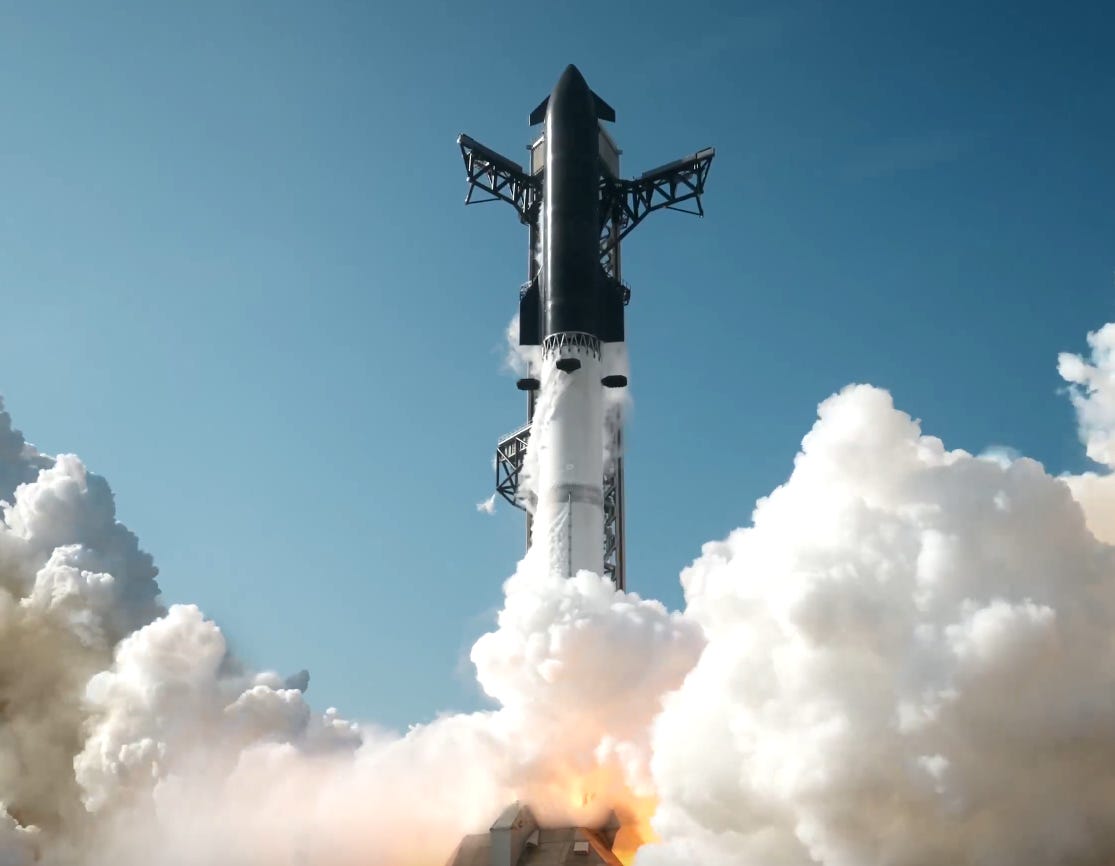
The rocket cleared the pad noticeably quicker than previous iterations, mainly due to the engines having more thrust. One engine shut down during ascent, but the flight was otherwise nominal up to stage separation. Two anomalies then happened in quick succession.
One engine on the booster seemed to explode during the boost back burn, taking out several others and precluding a complete burn and leading to the booster crashing. This is not necessarily an engine issue - prior failures on boost back have been caused by the motion of propellant in the tanks causing engines to be incorrectly fed. If the high power turbopumps of engines like Raptor ingest a gas bubble, for instance, it can destroy them. We will have to wait for more information from SpaceX to understand the root cause of the problem.
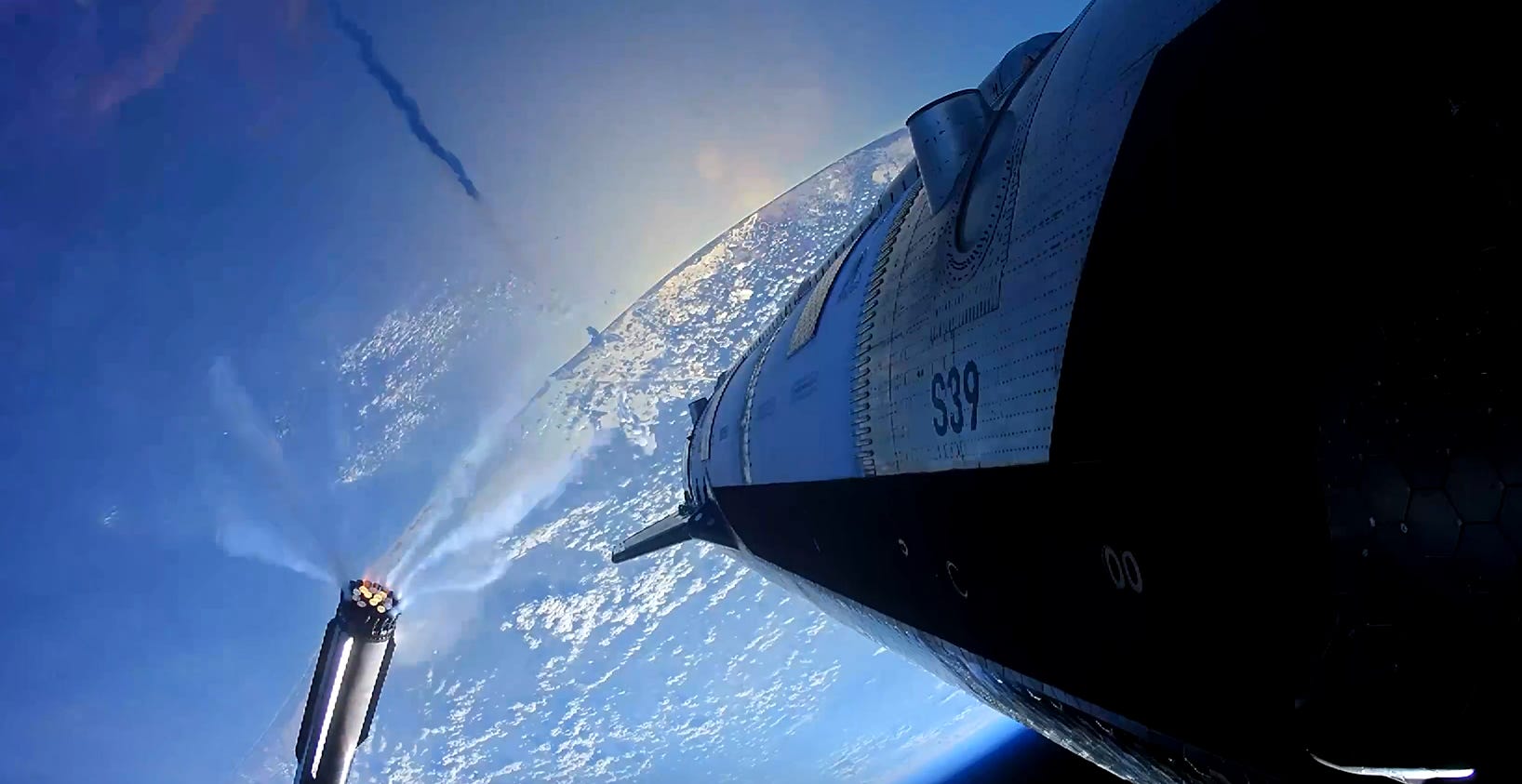
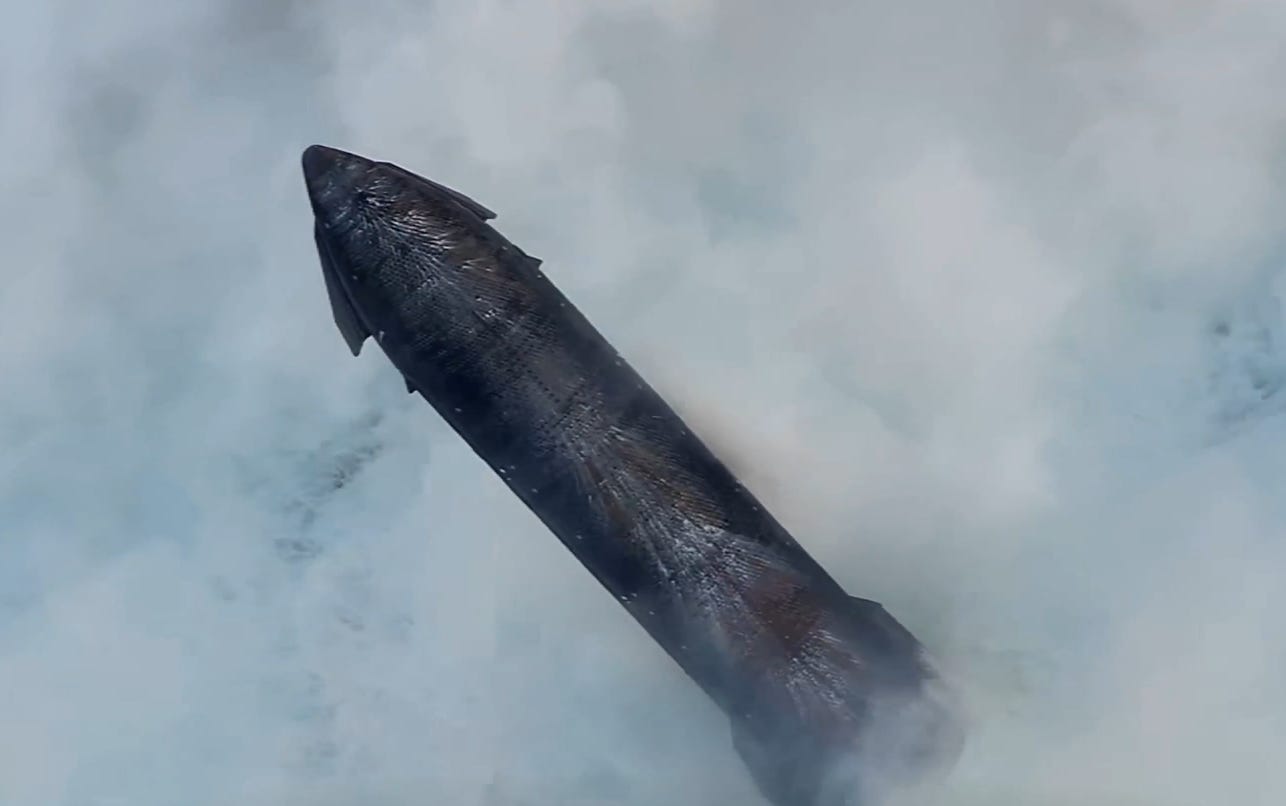
The ship lost one of its vacuum engines early in the burn, and had to complete a longer burn on 5 engines. Notably, it was still able to reach its intended target area accurately enough to be caught on camera by the buoys and drones set up there for the event. The ship made a soft landing, with a visibly intact heat shield, before falling over as expected and exploding.
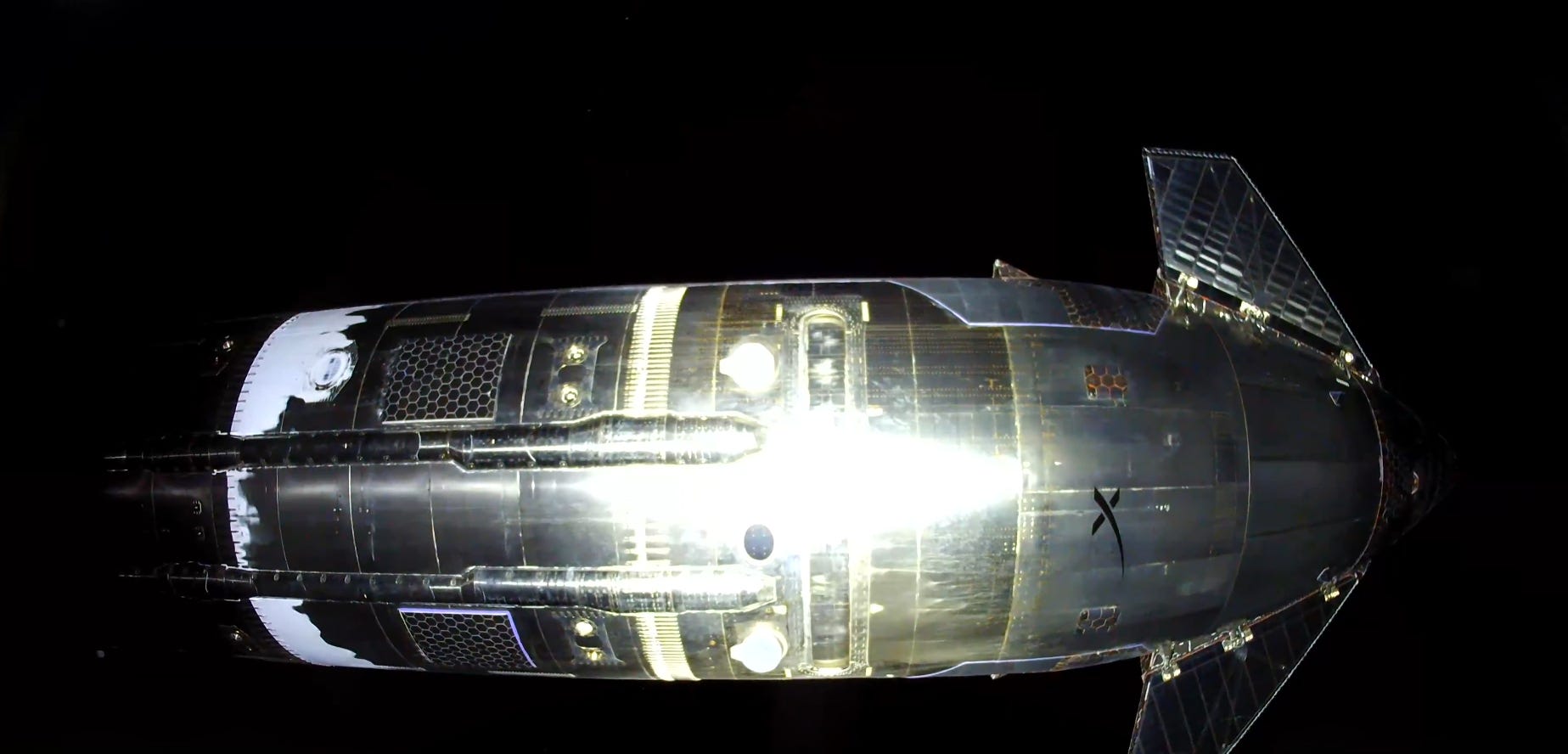
The engine out precluded doing a relight test on orbit, but the payload - 20 Starlink mass simulators and two active satellites that filmed the outside of the ship - was successfully deployed by a faster, improved “PEZ dispenser”.
Overall, a partial success and a good showing for the first outing of so much new hardware.
The New Version
Starting from the top down, here are the big changes that have been made to the Starship stack.
The ship itself has a redesigned thermal protection system (TPS), most notably the clips which hold the tiles in place. The condition of the heat shield after reentry seems to have vindicated this change, as we are not seeing the tile loss we have seen on previous flights. There is also new hardware added for propellant transfer, which should be demonstrated with this version of Starship, and is essential for achieving its objectives such as the Artemis Moon landings.
The top of the Superheavy booster is notably different. Instead of a disposable hot staging ring there is an integrated structure, and the four grid fins have been replaced by three in a ‘T’ shape. This reduces the weight of the booster, but given how the boost back anomaly seems connected with the hot staging, it may be a focus of fixes in the future. At the base of the booster, shielding around the engines has been stripped back, with the engines themselves redesigned to contain failures.
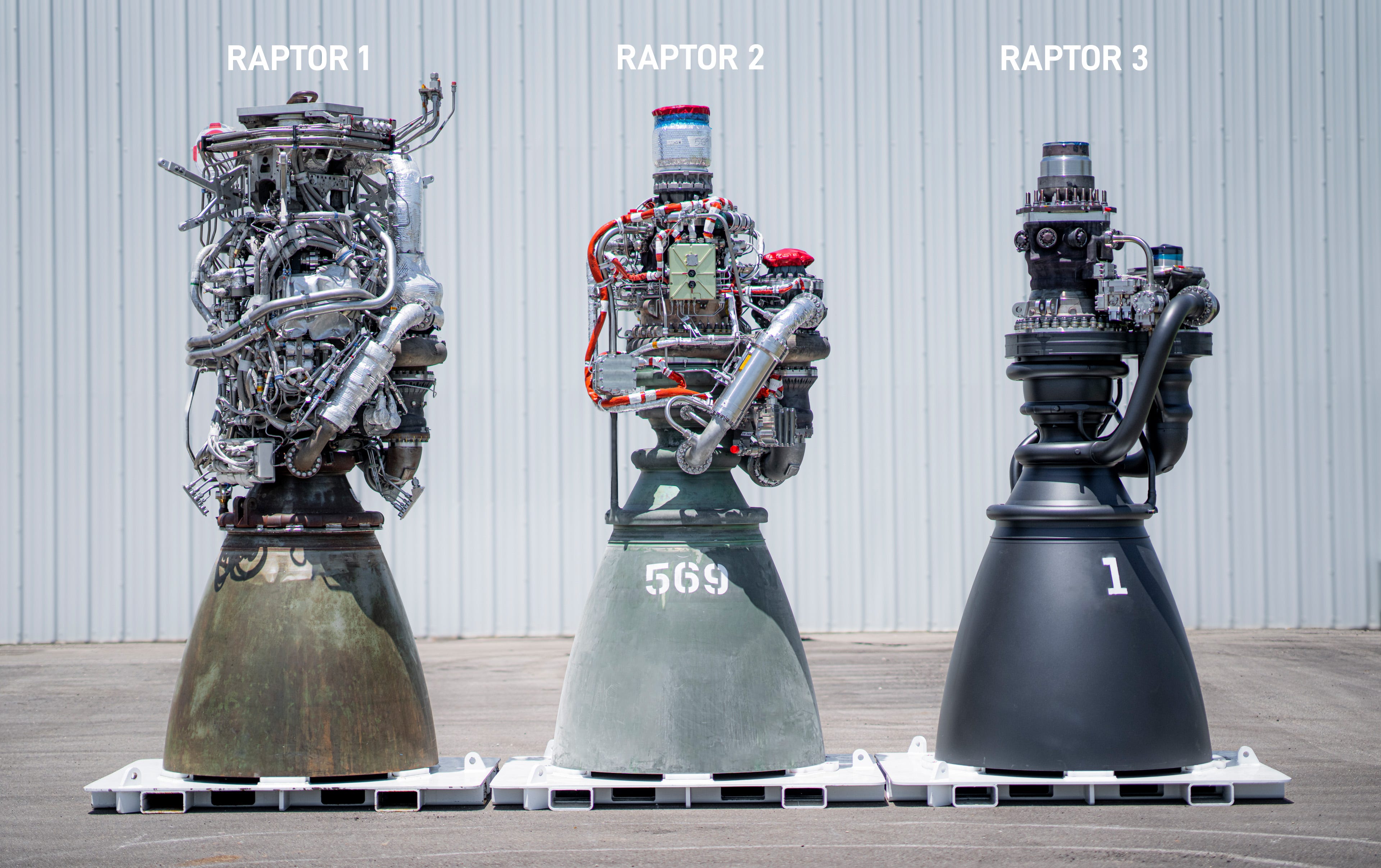
The raptor engines themselves on both stages are new designs - providing a significant boost to thrust and a small boost to specific impulse. The new engines are also lighter, and have simplified much of the plumbing and moved into inside the engine.
On the ground side, V3 launches from an entirely new pad. Instead of a launch stand over a flat pad, there is now a deeper flame trench to manage the exhaust. The deluge system which dampens the impact with huge quantities of water is also substantially scaled up.


Recent third party photographs have shown the stand holding up well to the launch, with what appears to be only cosmetic damage.
What’s Next
The extent of the changes led to a substantial stand down of the program, and provided that correcting the booster issue on Flight 12 does not require too much of a redesign, the company should be able to get back to more regular flights.
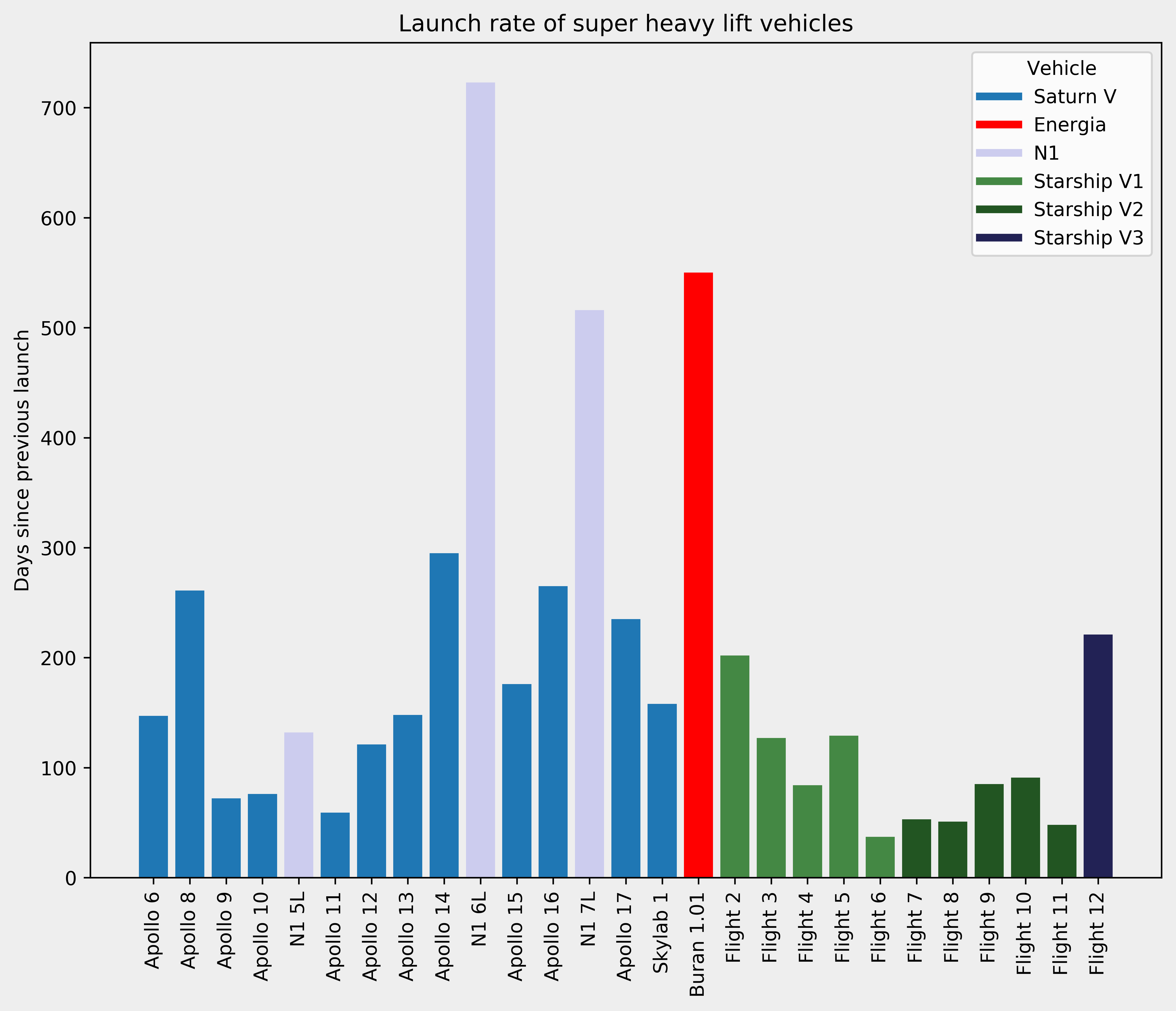
The usual time between previous Starship flights was about 50 days. If that were to be the case for the V3 test campaign, we would expect to see Flight 13 in July, and a total of 5 launches in 2026.
This timeline is probably optimistic for the next launch, but if SpaceX continues to improve there may be acceleration in the latter half of this year. The bear case is continuing anomalies during test flights, or the booster needing a fundamental rework - the bull case is that they reach orbit with Flight 14, recover booster and ship, and reuse a full stack before the end of the year. It’s going to be an important year for the company either way.
What do you make of the markings on the ship's tiles? Cosmetic damage only, or something that would preclude their reuse (if the ship had been recovered)?