

The Chinese Catch Up
With the successful recovery of a Long March 10B first stage, the US is losing its monopoly on reusable launch vehicles.

The Chinese space agency has just succeeded in recovering their first orbital booster. The Long March 10B carries comparable payload to the Falcon 9, and uses the same propellants in the first stage. It launched yesterday morning from Wenchang spaceport on Hainan Island, and minutes later the first stage was recovered downrange on a specially designed boat, featuring a distinctive catching mechanism.
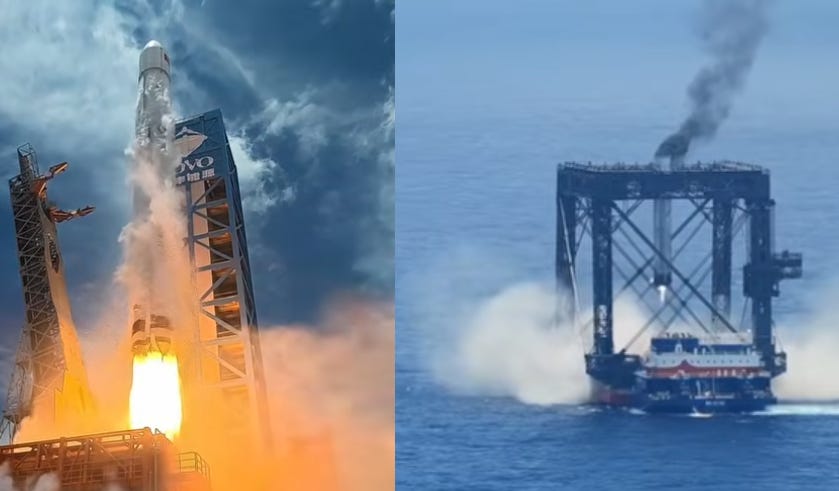
A previous suborbital mission in February of the Long March 10A variant, which also functioned as an abort test for China’s new manned space capsule, demonstrated part of the recovery process by splashing down in the sea close to the recovery vessel. After this dress rehearsal, they were ready to try for real, and succeeded in catching it on the first attempt.
I have written before about how the lead the US (mainly SpaceX) has over China is down to reusability. You can read a detailed analysis I have done of that here:
Mass Value Report for June 2026

NASA’s Artemis program has of late been imbued with a sense of urgency that had previously been lacking, thanks to the new Administrator Jared Isaacman. A key part of this urgency is the fear that the Chinese space program will return humans to the Moon, and once there be able to grab the best areas and dictate rules.
This rocket is produced by the state-owned launch company CALT, rather than one of the many private launch companies attempting the same. We should expect to see other Chinese vehicles recover their first stages soon.
The Catch
Despite the inevitable claims that China merely replicates stolen western technology, the recovery mechanism used by the LM-10B is unique. Cables move into position as the rocket approaches so as to capture it regardless of any position error, which is more tolerant than SpaceX’s tower arms.
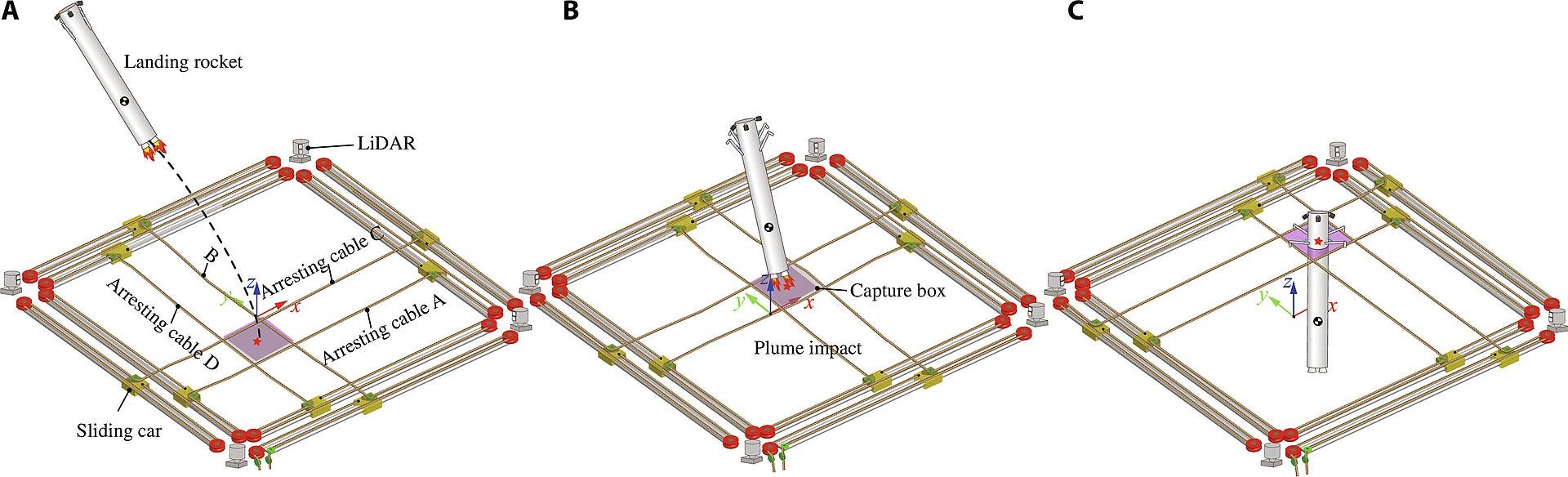
The cable method also means that the rocket can fly without carrying heavy landing legs which cost Falcon 9 some payload, and also once the rocket is recovered it is in a stable configuration and cannot tip over, which is something that frequently plagued early Falcon 9 landings.
The main disadvantage over the Super Heavy catch method is that this is still a downrange recovery, with the cost and delay that entails. It is also not clear how well it would scale to a larger vehicle. It may well be that, when China scales up to its Starship-sized Long March 9 rocket, they end up with a booster recovery system similar to the tower arms used by SpaceX out of necessity.
Regardless, it could be argued that any recovery method that gets the booster back to you intact is a good one. That is the most important thing, and China achieving it is a significant milestone.
On to the Moon
This reusable rocket is part of the Long March 10 family, which was originally initiated for the Chinese lunar program as a more efficient stopgap before the Starship-scale Long March 9 is available. It comes in four variants:
LM-10 - a three core all kerosene/liquid oxygen rocket, superficially similar to Falcon Heavy, that is capable of sending around 27 tonnes to the Moon, on par with SLS. All its stages are expendable. This will debut next year.
LM-10A - a single core variant of the above, with a reusable first stage. This will be used to send the new Mengzhou capsule to the Chinese space station, and is expected to fly later this year.
LM-10B - Yesterday’s flight, this is similar to the LM-10A but replaces the kerosene/liquid oxygen upper stage with a liquid methane/liquid oxygen upper stage, allowing more payload to LEO. This will be a commercial launch vehicle.
LM-10C - Still under development, this will replace the first stage with a liquid methane/liquid oxygen variant. Likely it will supersede the LM-10B.
Official sources have stated that the LM-10B can use boosters from the LM-10A, so we can assume they are identical, and the LM-10A booster is a reusable variant of the LM-10 boosters. That means that this launch is contributing to the Chinese manned lunar effort. The LM-10 shares a common upper stage design with the LM-10A, so when that rocket flies later this year all parts of the lunar rocket will have had some testing. Both spacecraft needed for the mission are already being tested as well.
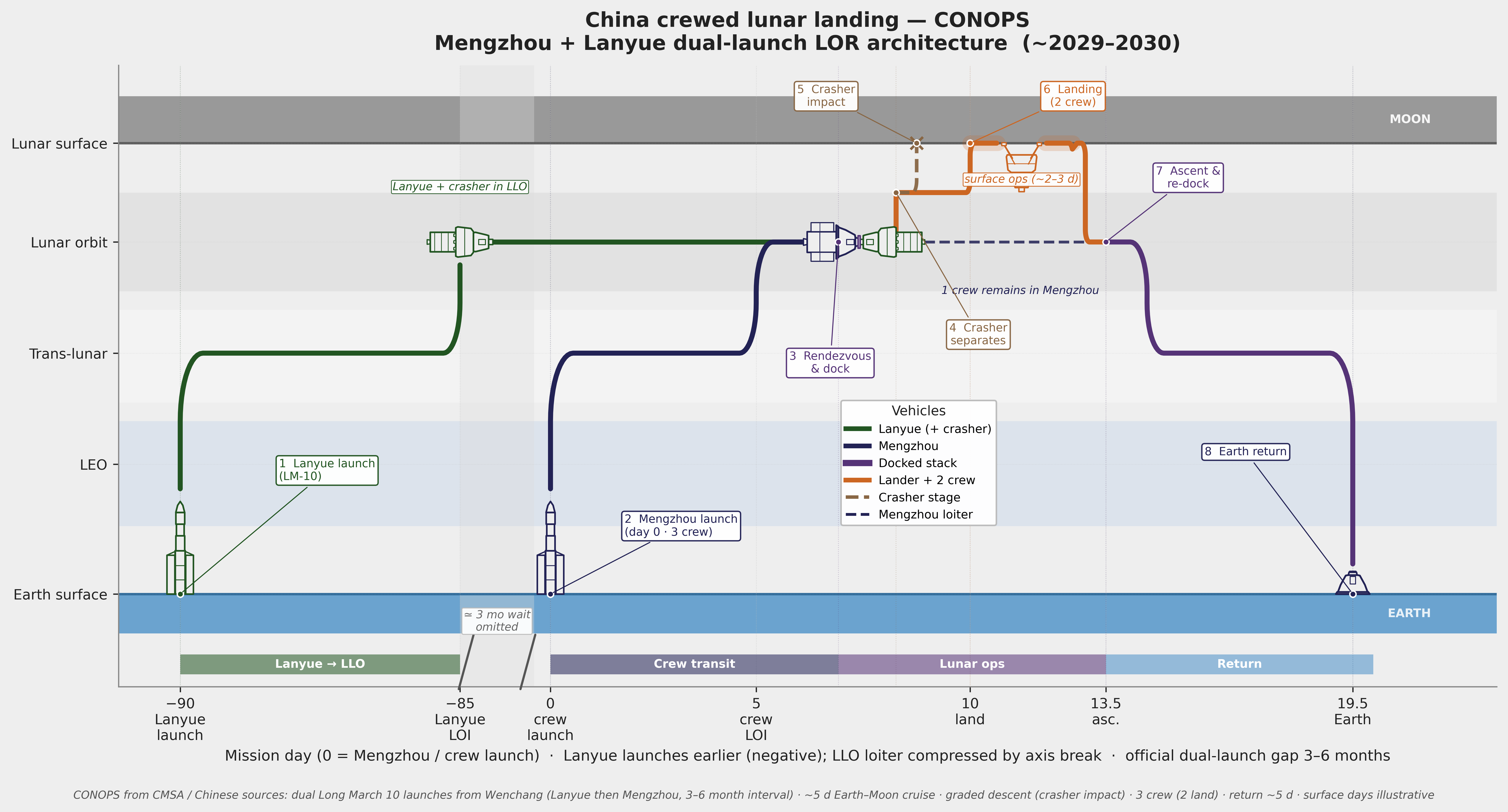
The United States is not standing still though - this week has seen both a static fire for the next Starship test launch, and the beginning of stacking of the SLS for Artemis III. The race is surely on, and from next year onwards we shall see an increasing frequency of launches from both programs.
The Rest of the World
Despite being, seemingly, 10 years behind the US in reusable rocketry, the rest of the world is even further behind. Russia, Europe, Japan and India have all not yet developed any comparable capability, and it will be some time before they do.
No nation can claim to be a 21st century space power without this reusability - the gap in launch capability is too great. The US had this space to itself for a decade, and now the rising power China is joining that club. The strategic implication is hard to avoid: any other nation or bloc that wants to be a part of the space future should act now, or concede space to others.
This is the end of the article. This one is free for all readers, but some of my work is for paid subscribers only. Upgrading gets you full access to articles like these:
The history and current state of the art of partial gravity research, important for building human colonies on Mars or the Moon.
How the threat of ASAT weapons and satellite constellation technology could lead to a militarisation of space.
…and many more, including my regular monthly Mass Value Report where I apply a unique analytical lens I developed in this paper to the launch and space industries.
To subscribe costs about the same as a cup of coffee every month. Would you buy me a coffee to hear a complete set of my insights each month?