

Nuke Mars!
Designing a reactor for the Red Planet

Today’s post is a guest post from Jordan Taylor. He writes at Incautious Optimism on a range of forward thinking technological topics.
It feels unlikely, down here in the drizzle & mud, but humanity’s destiny is in the stars.
By hook or by crook or by twisted fantasy, we owe it to ourselves to take the leap into the big black. It looks impossible for now, but what choice do we have? We’ve conquered the new world, we’ve mapped the dark continents, cured agues and created silicon intelligence, so what else is there? Let’s take to the frontier once more, lest we lapse into solipsism and digital dreams.

And what to do when we get there? We’ll build and breed, of course, but to do both requires energy. Energy to heat & light ourselves, bring oxygen, render distant soils, grow crops and bring forth metal. Energy is life.
But whether Mars, the moon or some distant spinning tube in the heavens, we need a way to turn effort into ergs, and one that doesn’t turn off at night. If there’s a night.
This means a nuclear reactor, but one specially adapted to the dry fridge of Mars or the moon. There can be no cooling towers, no rivers, minimal concrete and no staff of thousands. How do we do it?
Let’s design a reactor for the skies and bring the power of the atom to Mars!
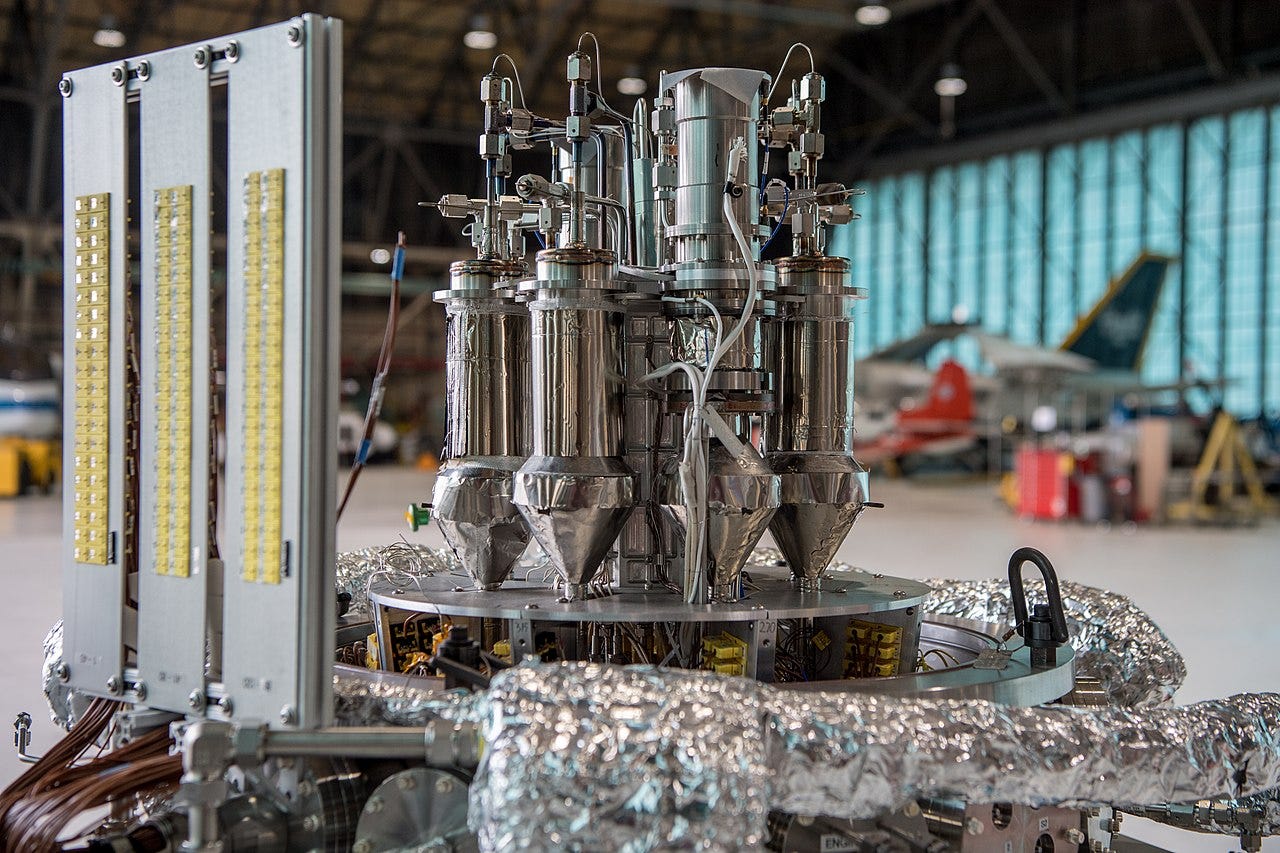
1: Squaring the circle.
We need energy for everything, but for most things space-based we make do with solar panels, or at least radio-thermal generators, so why not stick with these? We know how to use them after all. Why take a fling with fission?
Well there are a couple of reasons. For one, there’s the obvious factor that the sun sinks below the horizon every night, but that’s obvious. The second point is that if you want to do anything serious on Mars like, say, build things or support a small research colony of actual living, breathing people, you’re going to need a whole lot more power than we currently supply to any space mission, anywhere.

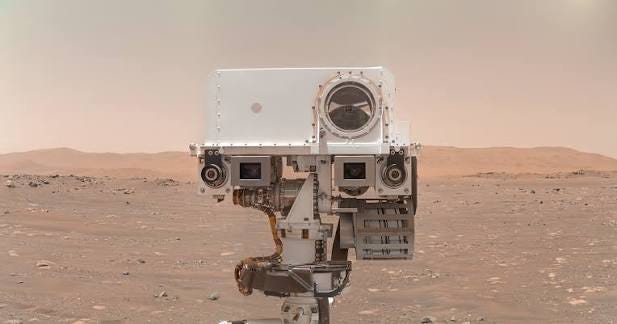
To take a rough comparison, let’s look at the friendly face of the Perseverance rover, which after four and a half years is still bumbling around the red planet and is currently exploring something called the Jezero Crater. No, me neither.
Now, the steadfast, stubborn little rover (I say ‘little’; it’s actually the size and weight of a small car!) needs a reliable power supply. Unlike most space-based explorers, this persistent voyager uses the power of the atom, with a supply of Plutonium 238 slowly decaying its way down to nothing inside the machine. This releases 110 Watts and a decent bit of heat to keep the probe all snuggly warm in the harshness of the Martian night, which is enough to do real science, explore the surface, take samples and do fun things like deploy a teeny-tiny helicopter over the dry-frozen desert of another world. In other words, plenty of power for what it needs.
But not enough for what we need! For those who remember the era of the Tungsten incandescent light bulb (that’s pre-smartphone era, Gen Z readers), 110 Watts is the size of the really big ones that could light up a whole room, and probably made your father cross at the electricity bill back in the day. In other words, it’s enough power for a slow, prowling robo-rover or a big 1980s living room, but wholly insufficient for keeping people alive on the surface of an oxygen-free freezer.
For that kind of thing we need a mission power in the range of 10s to 100s of kiloWatts minimum, thousands of times more than Perserverance and far more than you’d be comfortable generating from a radio-thermal generator working off decay heat.
On a manned mission, which would need to keep people alive for long periods, you’d need that power for creating oxygen, for heating the crew, for generating nitrogen fertilizers, making metal, forming fuel and creating concrete. All things I covered in an article about a year ago that went into a little too much detail on everything you’d need to do just to create concrete on the fourth planet from the sun.

December 12, 2024
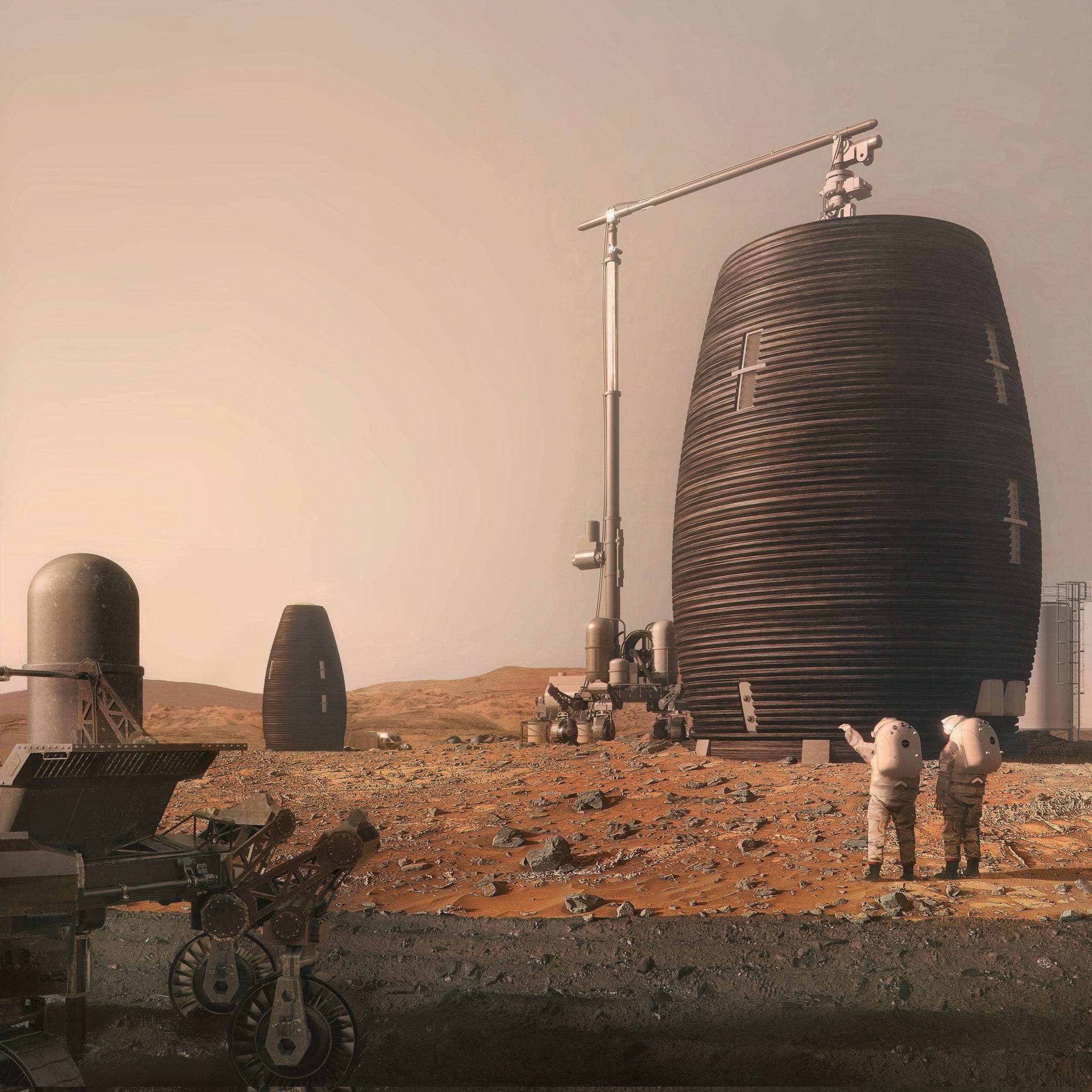
The prospect of colonising another world has struck a flame on our collective imaginations for centuries, and Mars looms large in these ambitions. Yet as rockets grow larger and dreams grow more fanciful, a sordid question remains:
And that’s a lot of power!
So what about solar panels? Well it’s certainly possible, but our closest heavenly bodies are a bit mean to solar panels. The moon, for example, has a night that lasts a fortnight, which is great if you’re into stargazing. Not so great if you’re trying to live off a giant battery for fourteen days. Mars, meanwhile, has dust storms that last for weeks; not only an abrasive, occluding hazard to solar panels, but also likely to significantly lower a would-be colony’s available power for the duration. Not ideal.
Part of the trouble is the nature of NASA mission design. NASA, as a rule, doesn’t propose missions with a power requirement above what can be reasonably achieved, and development of a new space-based power system usually needs a mission to anchor itself to. This is a fun bureaucratic game of chicken & egg whose only progeny is efficient, but underpowered, spacecraft. Surely we can do better? Well, NASA eventually did.
Enter the Kilopower project!
2: Sodium Simplicity.
The Kilopower project designed a micro-reactor which could sustain a kilowatt of useful electrical power over a minimum of ten years. Now, a kilowatt isn’t very much; it’s about what you need to boil a kettle or run an average English household (or half an average American household).
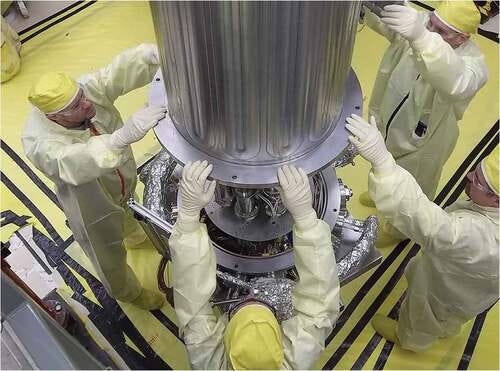
This may not sound terribly impressive considering that Westinghouse happily commission reactors that generate a Gigawatt of electricity per core, or a million times what the Kilopower does, but you shouldn’t focus on power here, but on design. After all, the reactor is absolutely tiny, can run for well over ten years with barely any maintenance and, most importantly, can be scaled-up as required.
Additionally, Kilopower needed to be appropriate for use in the vacuum of space, on the moon, on an asteroid or on Mars. In all cases that means you lack a number of staples that Earthbound reactors take for granted, namely: Water, atmosphere, gravity, lots of steel & concrete and plenty of regular maintenance and refuelling. Kilopower would need to work without any of these, in a simple, robust and safe package that could be installed on-site by a couple of blokes or a remote rover. Put that all together and suddenly it’s not as easy as it first sounds, is it?
Not as easy, but very, very ingenious.
Firstly, it’s tiny. A core the size of a toilet brush receptacle is joined to a mad twisted stainless steel crown of pipework terminating in a jewellike cluster of cones & pipes at the top. It looks like something a mad alien emperor would wear as a ceremonial headpiece while he casts unbelievers into the sodium lava lake. Possibly while stroking a sort of catlike creature.
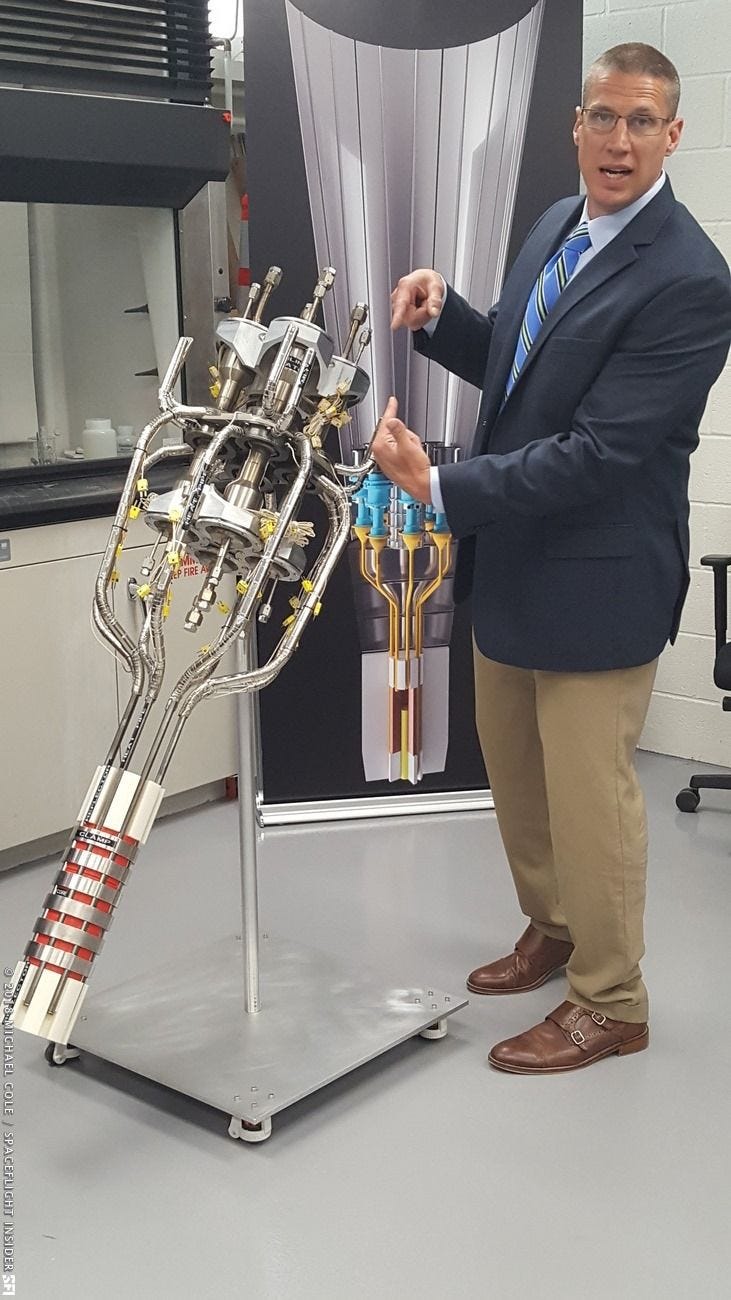
The tiny core can remain small because it runs on 93% enriched Uranium 235: This is the proportion of the Uranium that is fissile U235, rather than indolent Uranium 238. U238 makes up the vast, vast majority of uranium on Earth and enrichment is expensive, so how much is 93%? Is that a lot?
93% is really really enriched. A normal pressurised water reactor, the kind we use to keep our lights on, runs on an enrichment level of about 3%-5%. Anything above 20% is considered ‘highly enriched’ and puts you in the territory of military naval reactor cores. 93% is just nuts, a very spicy meatball indeed!
One of the reasons for this unparalleled spiciness is the need to stay small, suitable for space travel. The more enriched the fissile uranium, the smaller the reactor can be. The other reason you might want to use very highly enriched fuel is to make use of the ‘fast neutron spectrum’.
Basically, fission is most likely when a neutron, shooting out of a fissioning uranium nucleus, has just the right energy level. Unfortunately, it starts out hundreds or thousands of times too energetic, and so in a conventional nuclear reactor needs slowing down by collisions with something called a ‘moderator’, typically either water or graphite. This moderation raises the chances of fission and allows modern reactors to work at relatively low enrichment levels.
In a fast neutron reactor, by contrast, you don’t bother moderating but let the neutrons blast around at high speed, and use higher enriched fuel to compensate. This means that you can keep the thing smaller, and also means that high energy neutrons have a small chance of transmuting boring every-day U238 into plutonium 239, which is fissile and a great energy source. In such a way, a fast neutron reactor can make non-fuel (cheap, common U238) into fuel, which is a neat trick, though not one that Kilopower is interested in. Kilopower simply wants to be compact and long-lasting, so highly enriched fuel and a fast neutron spectrum is the way to go! After all, every kilogram costs money when you have to launch it into space.
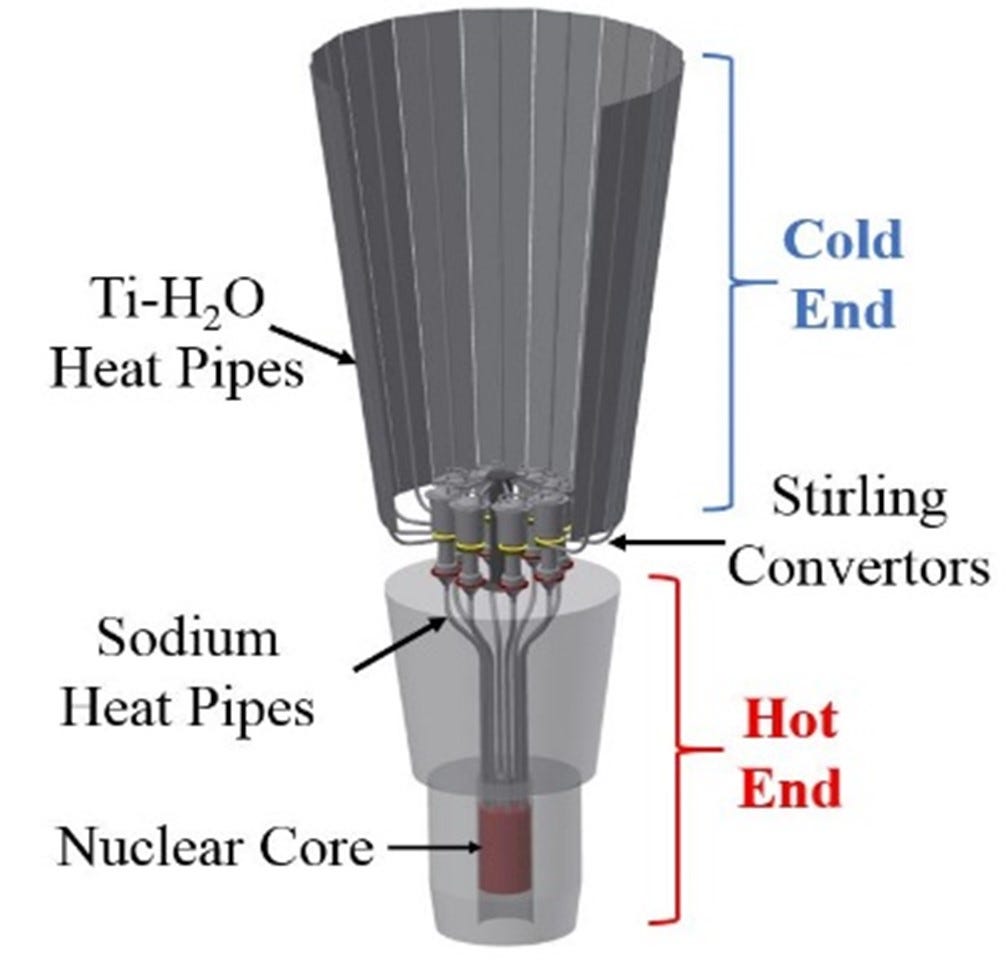
As a result of this high enrichment, high energy density and the need to avoid moderating water in the core, Kilopower is cooled by liquid sodium: A highly reactive molten metal that becomes liquid at a very manageable 98 Celsius; something that Kilopower will reliably stay well above for the entirety of its operational life, once started.
But first let’s zone in on what’s really unique about this little Reactor That Could: It’s not the high enrichment, it’s not sodium coolant. It’s simplicity.
A normal Earthbound power reactor has banks of pumps, water & steam injection pressurizers, control rod actuation, frequent movement of fuel during refuelling cycles, complex systems of valves, back-up emergency coolant and deluge systems, boron injection… it goes on & on & on. A terrestrial nuclear plant is a triumph of safety-conscious system engineering, but it’s a complicated one, and Kilopower dispensed with all of this. The intention for the system is that you set it up, get it started and just… forget about it, pretty much.
It has a small, solid core with no moving pieces except for the control rod which is designed to be moved on startup and then kept in place, unmonitored, for a decade at a time. The small size & low power means that reactivity effects are dominated by thermal expansion and are extremely stable. Low power designs (less than 100 kiloWatts thermal energy) make thermal management and irradiation damage a non-issue that does not complicate system design. Very low power level designs (less than 10kW thermal) feature such low burnup reactivity that movement of the control rod becomes a ten-year interval. A literal ‘tin’ wedding anniversary, marked out by tweaks to the control rod. There’s a quirky Martian anniversary gift for you! Even at much higher power levels, the stability is such, and burnup so low, that control rod movement would be something you’d only have to do occasionally, every few months or annually. In essence this is a nuclear battery.
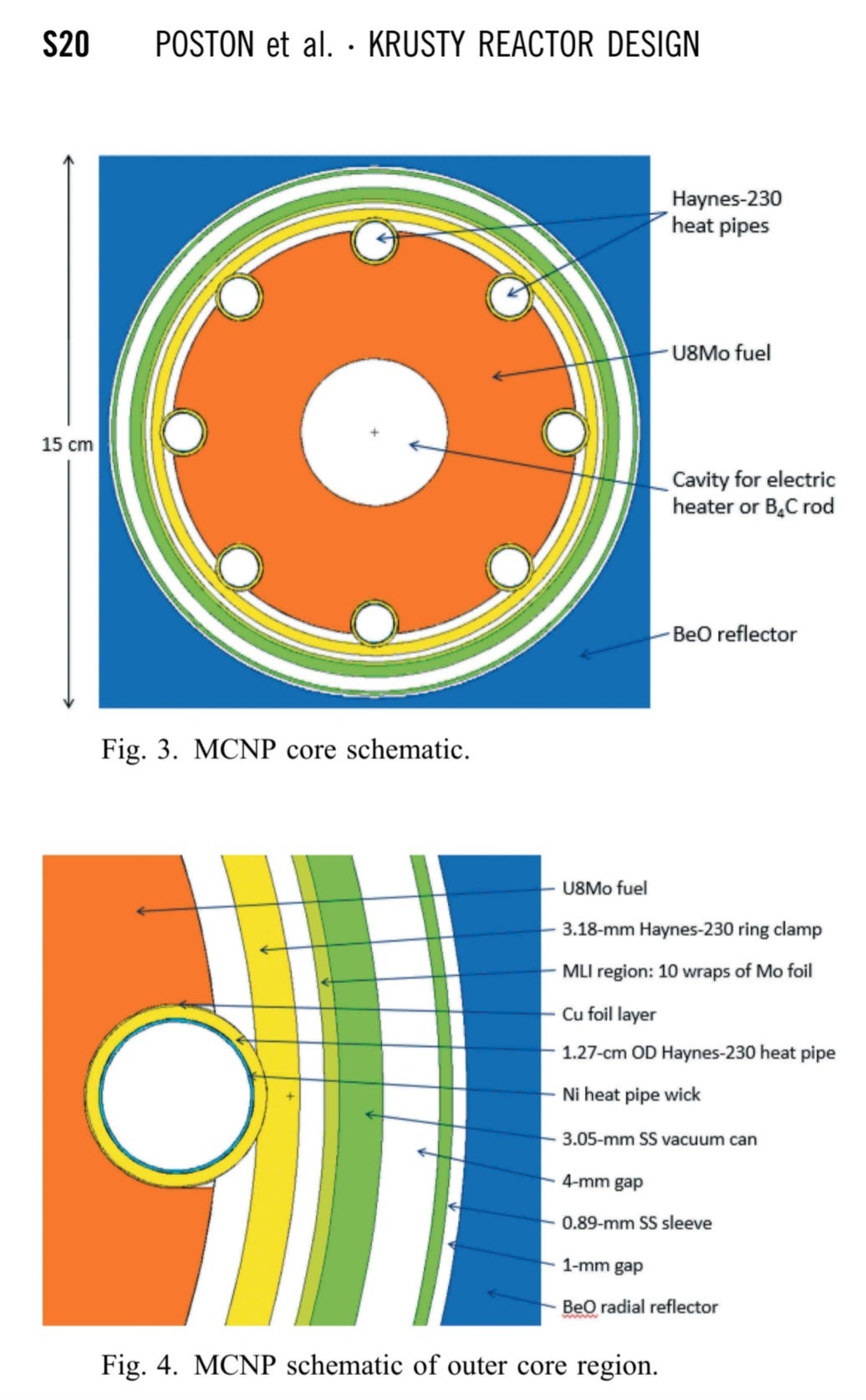
In all cases, the reactor is designed to handle worst-case transients such as coolant loss passively without any need for control inputs, further simplifying the system. Truly, this is a zen ideal: Feng Shui engineering, where less is more and the system simplicity brings reliability and safety, all in one. Perfect for missions to space.
Why, Kilopower doesn’t even have any coolant pumps!
That sentence above might give you pause. The more well-informed of you may know that there are terrestrial reactor designs capable of passive cooling, but these rely on convection, or the induced buoyancy cause by density reduction when a volume of fluid is heated in the core. That’s all very well & good on Earth, but Earth has something in abundance that the moon or Mars has very little of, and deep space none at all: Gravity.
How the hell do you cool a core passively without convection and gravity?
Well there’s a way, and it works very well for petite sodium-cooled designs like Kilopower, but to surmise what it is I’ll give you a little clue: Look around you. Find a plant or, better yet, a tree. A tree also lacks pumps, but still needs to get nutrients from the roots all the way up to the leaves, and our little reactor uses something very similar.
It’s capillary action!
3: Of Tree-Trunks and Sterling Engines.
Above the core, projecting like some kind of twisted metal flower, is a radiant expanse of heat pipes. These unassuming stems, almost plantlike, form the primary means of pulling heat from the core, and like a redwood growing majestically in quiet forest, like a grass stem or sunflower rendered in titanium by an atom-obsessed deity, Kilopower pulls sodium and water by capillary action to stay cool!
The heat pipes penetrate the core and surround it peripherally, soaking up heat and vapourising the sodium in the pipes. The pressure of evaporation pushes the vapour along the middle of the pipes to the interface with the Sterling engines, where the falling temperatures condense it into liquid again, albeit still seriously hot. This fluid is then drawn into the inner periphery of the pipe, a narrow wick section that pulls the fluid back to the atomic heart by capillary action: The movement of fluid in tight spaces caused by liquid adhesion to a solid ssurface. Further out, water heat pipes provide the heat sink to the radiators.
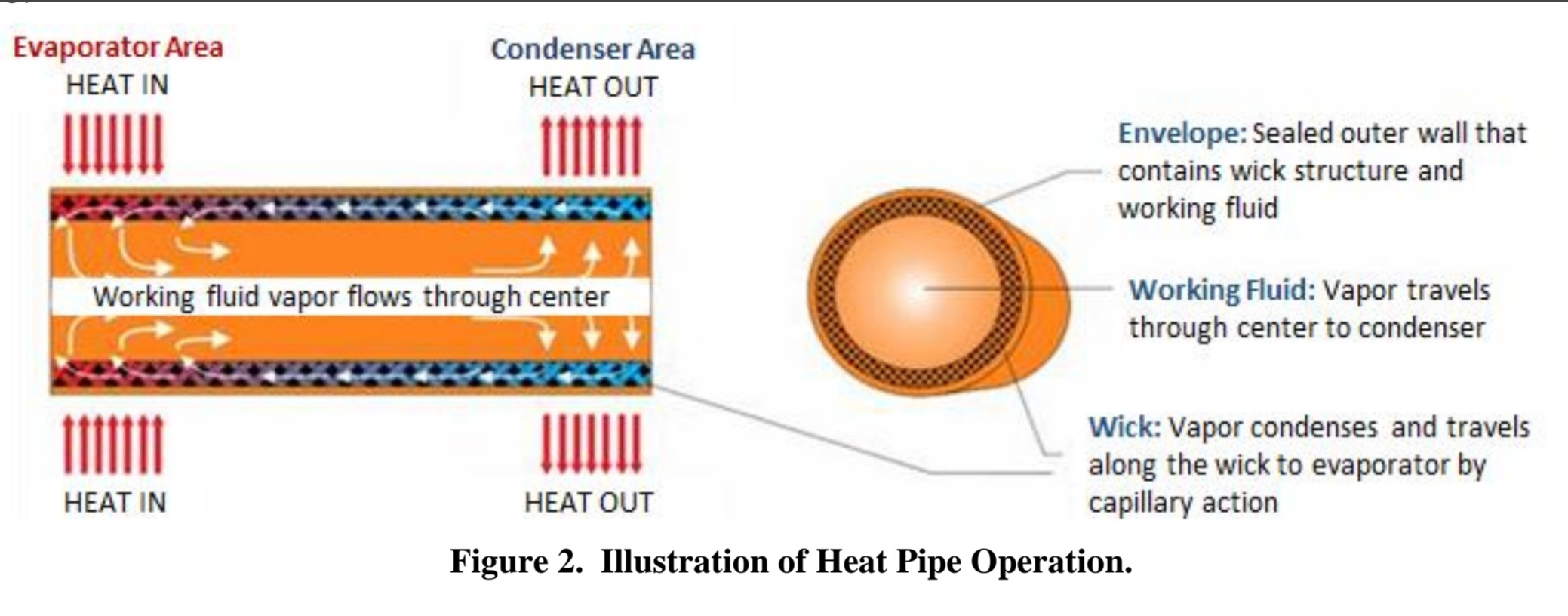
OK, so now we have a means to passively move coolant around that doesn’t require pumps or gravity. Hooray! But we still need a way of driving some kind of generator and making electricity, else all this ingenuity will be for nothing. This is achieved by something called a Stirling Engine; a simple and very reliable way of converting thermal gradients into reciprocal motion.
A Stirling engine works by sharing a reservoir of water in between two cylinders, one connected to a heat sink and one to a heat source (in this case, the condenser section of a heat pipe). There are a few ways to construct a Stirling engine, but in all cases the motion is driven by an oscillatory expansion & contraction cycle powered by the heat source.
Firstly, the heat source causes a local expansion that drives the first cylinder outwards, connected to a crankshaft linked to a second cylinder. This motion subsequently causes the second cylinder to open shortly afterwards, matching the increased volume of the shared fluid reservoir as it’s heated. The cooling of the fluid from the heat sink then increases the density of the fluid and shrinks the overall volume, reversing the process and returning the engine to its starting state. As the cylinders move in & out, their exposure to the heat source and heat sink increase & decrease in turn: When the cylinder from the heat source is fully extended there is a maximum net energy flow into the reservoir, and the net expansion drives open the heat sink cylinder, which switches the energy flow outwards and causes a net shrinkage, and so-on and so-forth, over and over.
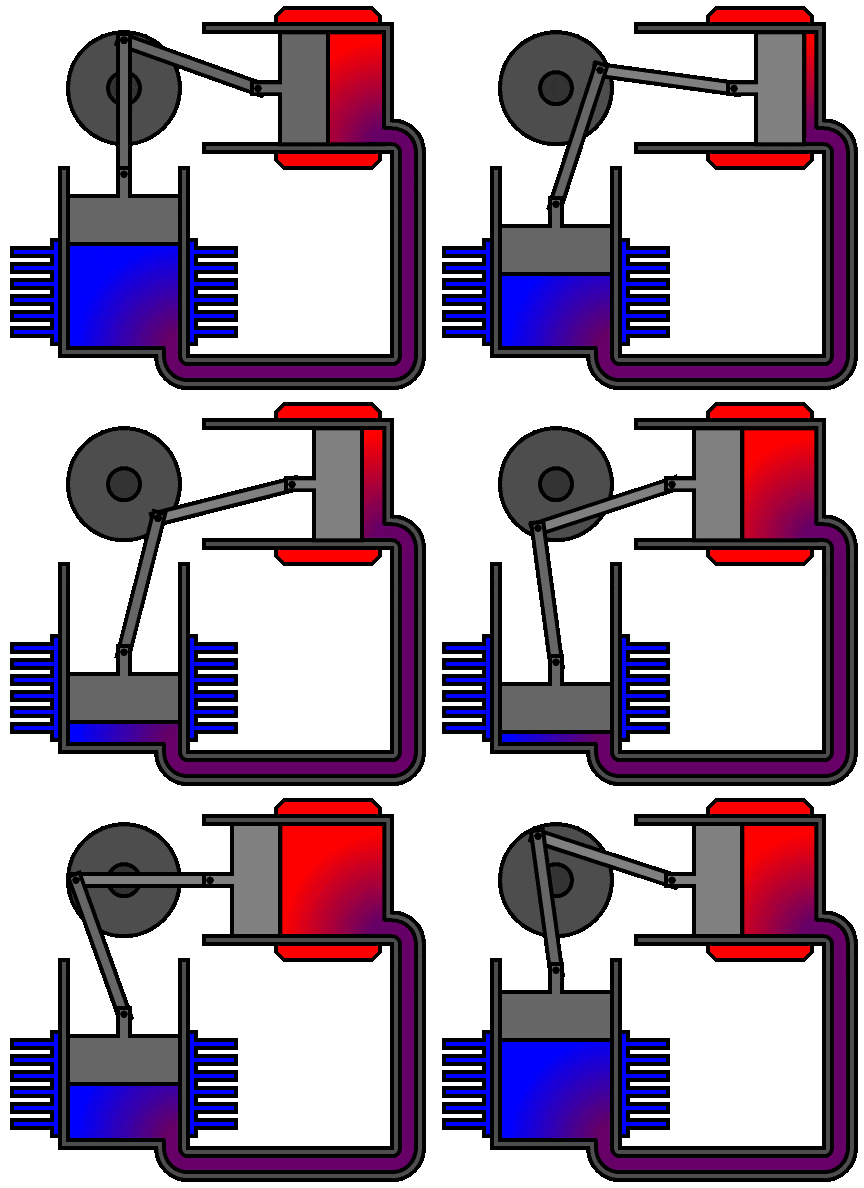
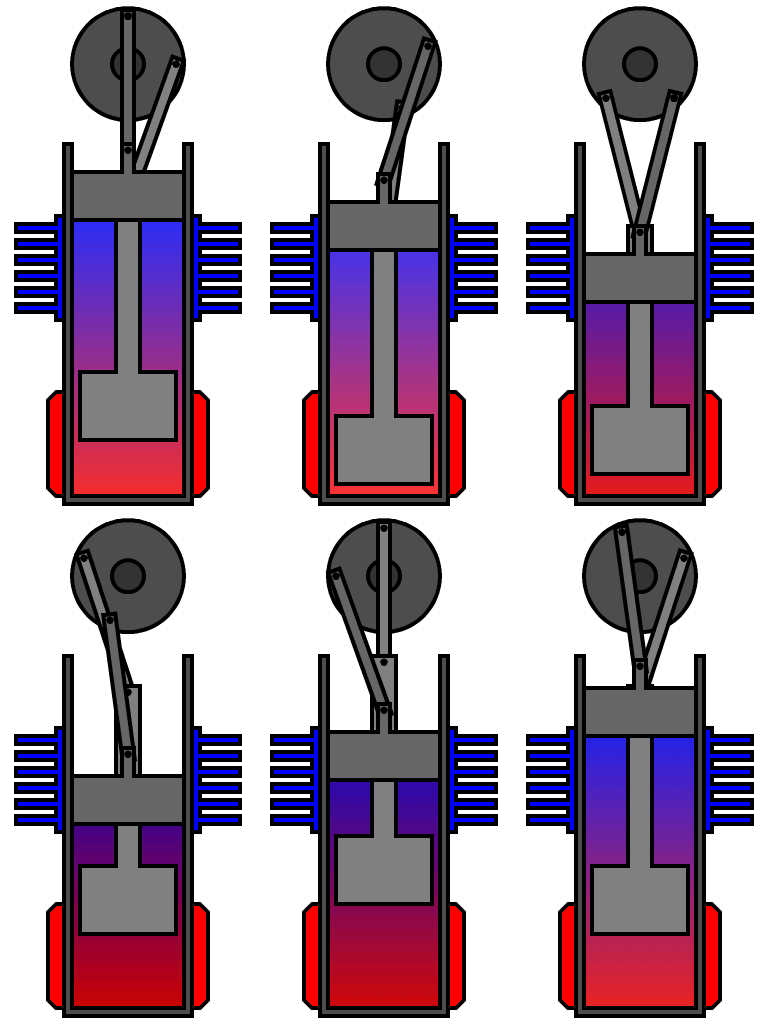
Here are a couple of animated images that illustrate the concept better than I just tried to!
So we’ve explained how the design uses a stable solid-state core and low-pressure, high-temperature molten sodium. We’ve explained how capillary action can drive a pump-less heat pipe flow and pull energy from the core. We’ve even explained how, with a heat sink, you can then turn this net thermal energy flow into mechanical action that can drive a shaft and so generate electricity.
But what can we use as a heat sink? We have no rivers or cooling towers to play with, after all. The answer once again, is wonderfully simple: Kilopower uses a radiator.
4: The Atomic Mushroom Field
We all know the most distinctive feature of a nuclear power plant: The cooling towers. The fluted, curvaceous steam-chimneys are iconic, nearly ubiquitous and instantly recognizable. There is a reason for this.
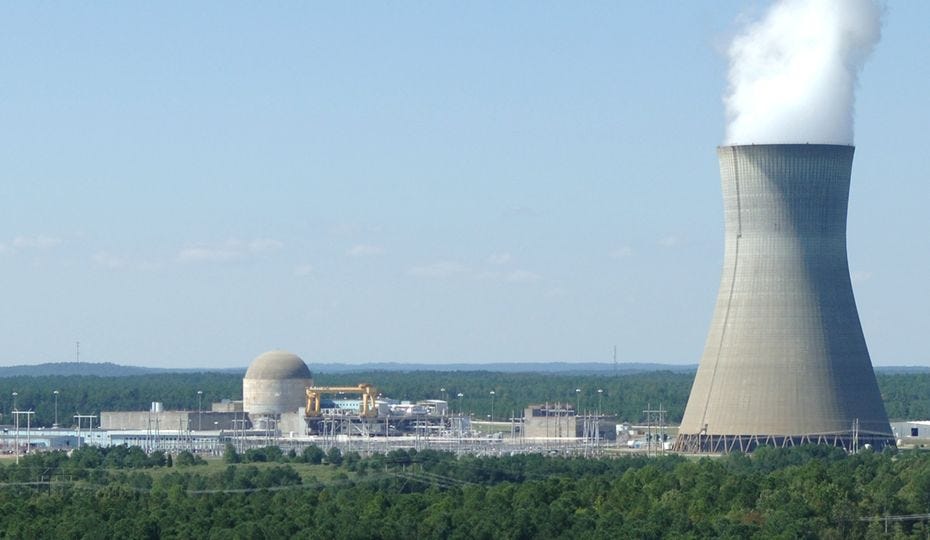
Evaporation makes use of a phase change in water to suck vast amounts of thermal energy quickly & efficiency out of a system. The reason this works is that phase changes (between solid and liquid, liquid & gas) demand a lot of energy as they transition from low enthalpy to high enthalpy states. To get an idea of how much energy this is, consider ice in a class of coke, supped on a hot day. Make it a hot day on the beach if you like, sure add some palm trees too, why not?
Anyway, what you will have noticed is that ice added to your fizzy coke takes a surprisingly long time to melt, even on a very hot day where the liquid itself is being heat basted by the sun and your skin is peeling. The reason this works is something called melting enthalpy: Raising a one kilogram block of ice one degree Celsius takes about 2 kiloJoules of energy, or the amount an electric kettle will convert to heat in one or two seconds. However, transitioning it from ice at 0 degrees to water at 0 degrees (melting it) requires a somewhat more impressive 332 kiloJoules. This is why ice is so effective at cooling down your coke, because the enthalpy change of the melting ice sucks up lots and lots of available heat.
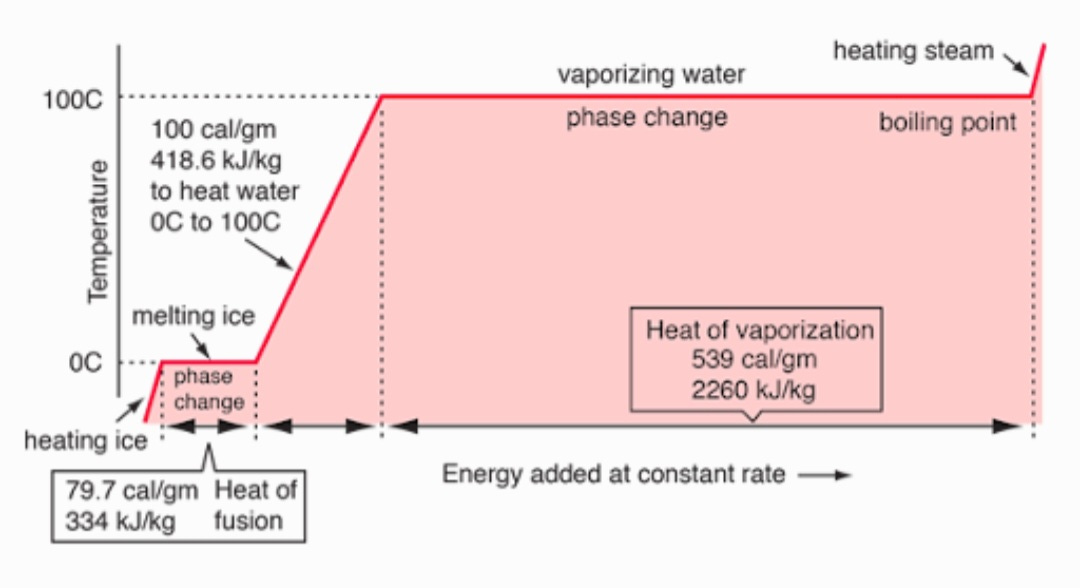
And it’s even more extreme with evaporation! The condensation enthalpy of water, which is what’s needed to get water at 100C to turn into steam at 100C at sea level pressures, is an absolutely ridiculous 2,257 kiloJoules per kg! In fact so huge is the enthalpy change required to evaporate water that if you started with water ice at absolute zero (-273 Celsius) and heated it all the way to steam at 100C, the change from liquid water at 100C to steam at 100C would take almost two thirds of all the energy required to get it there from the coldest temperature it’s possible to be.
This is why sweating is good at cooling you, and it’s why evaporation works so well to cool nuclear plants. This is also a very long-winded way to admit that KiloPower has a massive handicap in lacking access to environmental water for cooling.
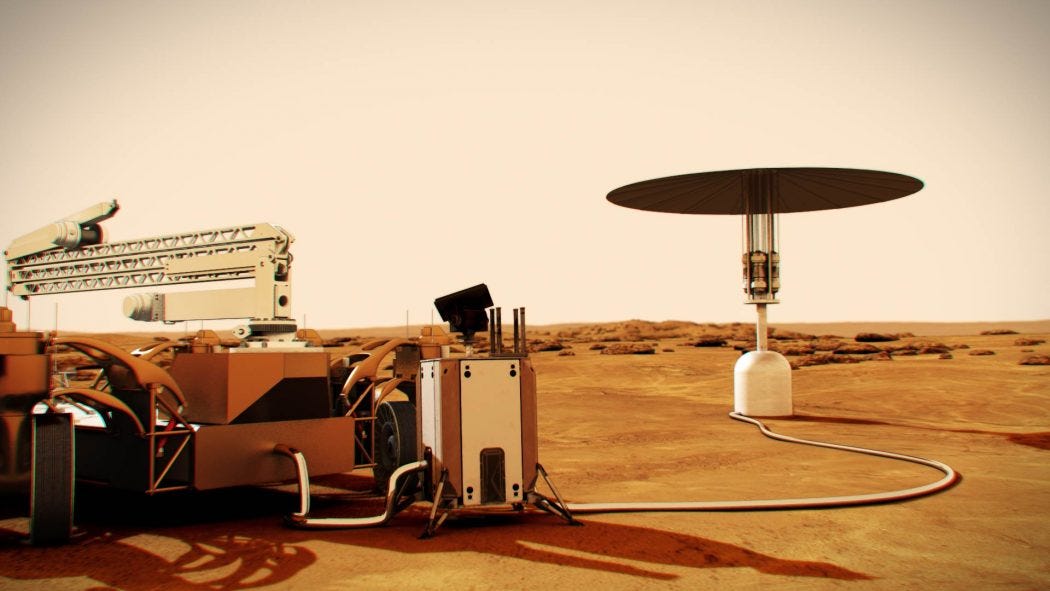
To make up for this, the KiloPower reactor uses huge radiator fins, which emit heat by radiation into the local environment and therefore can work in thin atmospheres or the vacuum of space. This can be a savage-looking vertical fin or a friendly looking dome shape (you call it), but what’s unmissable is that even with the mini-reactor’s tiny power levels, the radiator dwarfs the reactor system itself.
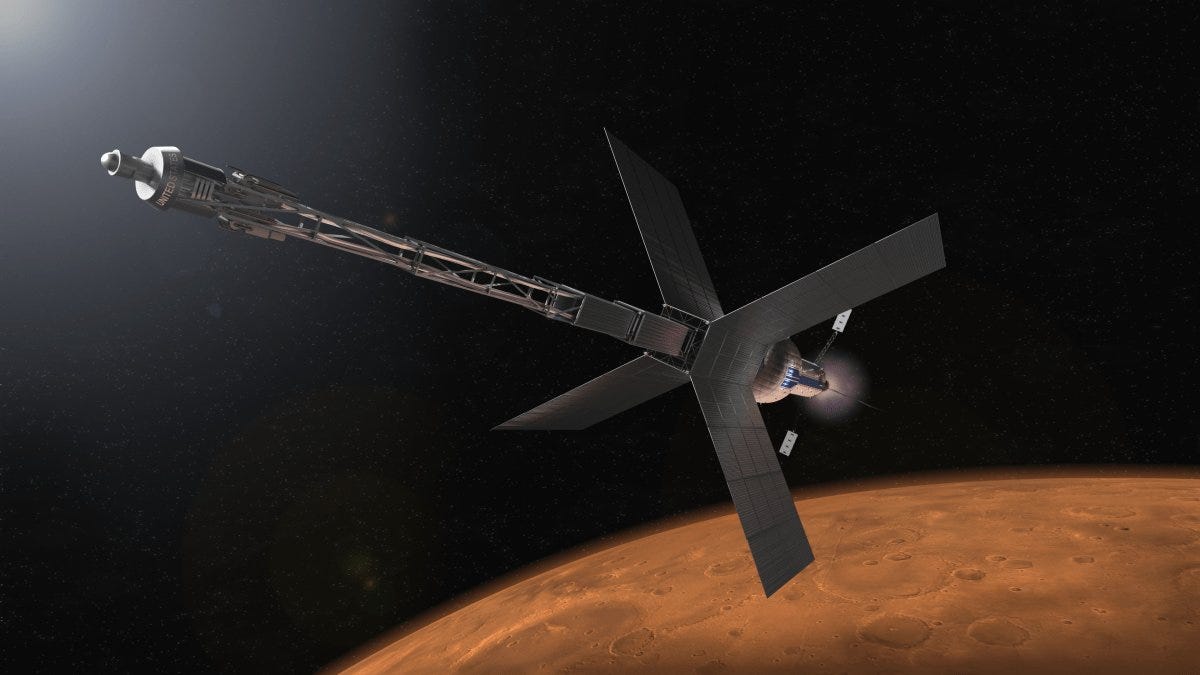
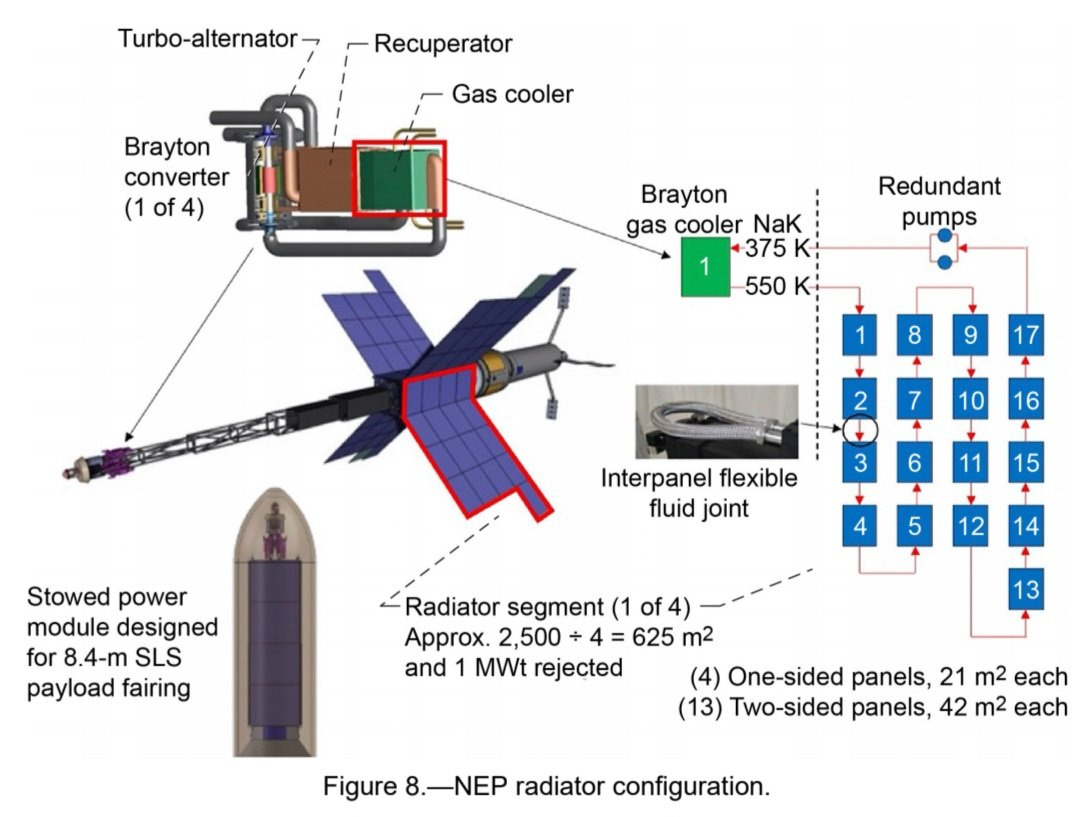
In fact the design-shaping effect of nuclear radiator systems, where evaporation isn’t an option, can even be seen in a NASA concept for a nuclear-electric Earth-Mars spacecraft. In this nuclear powered albatross, a Brayton cycle fast reactor powers electric thrusters with either Xenon or Argon. This massive interplanetary cargo truck is powered by a hypothetical 1.9 MegaWatt nuclear reactor (a lot larger than KiloPower), and the bizarre thing about it is that the reactor power is limited by the amount of radiator fins that can fit in a single SLS rocket orbital launch stage. An entire spacecraft is literally designed backwards from the heat-sink!
And so it is with KiloPower and other low-maintenance reactor designs. When we finally plug up the courage to bridge the black and land on the Red Planet, or the moon or wherever, radiator fins & domes will probably characterize our first settlements.
Mars, home to the atomic mushroom field!
And so with fuel cycles, cooling, electricity generation and recovery from excursions covered, the only thing left is shielding, and here we will simply borrow from nature! A low power, self-stabilizing reactor doesn’t need complicated shielding systems, and can just be buried in the rock. On our new world, the first trees we will plant will be of the fissionable variety.
But design is one thing, and qualifying is quite another. Until kiloPower came along, every new American advanced reactor design for the previous 40 years had been a failure, with nothing brought to realization. To make our little space-reactor the exception, NASA needed to do some testing. And so commenced a new project: The Kilowatt Reactor Using Stirling TechnologY test project.
KRUSTY for short.
5: Keep It Simple, KRUSTY!
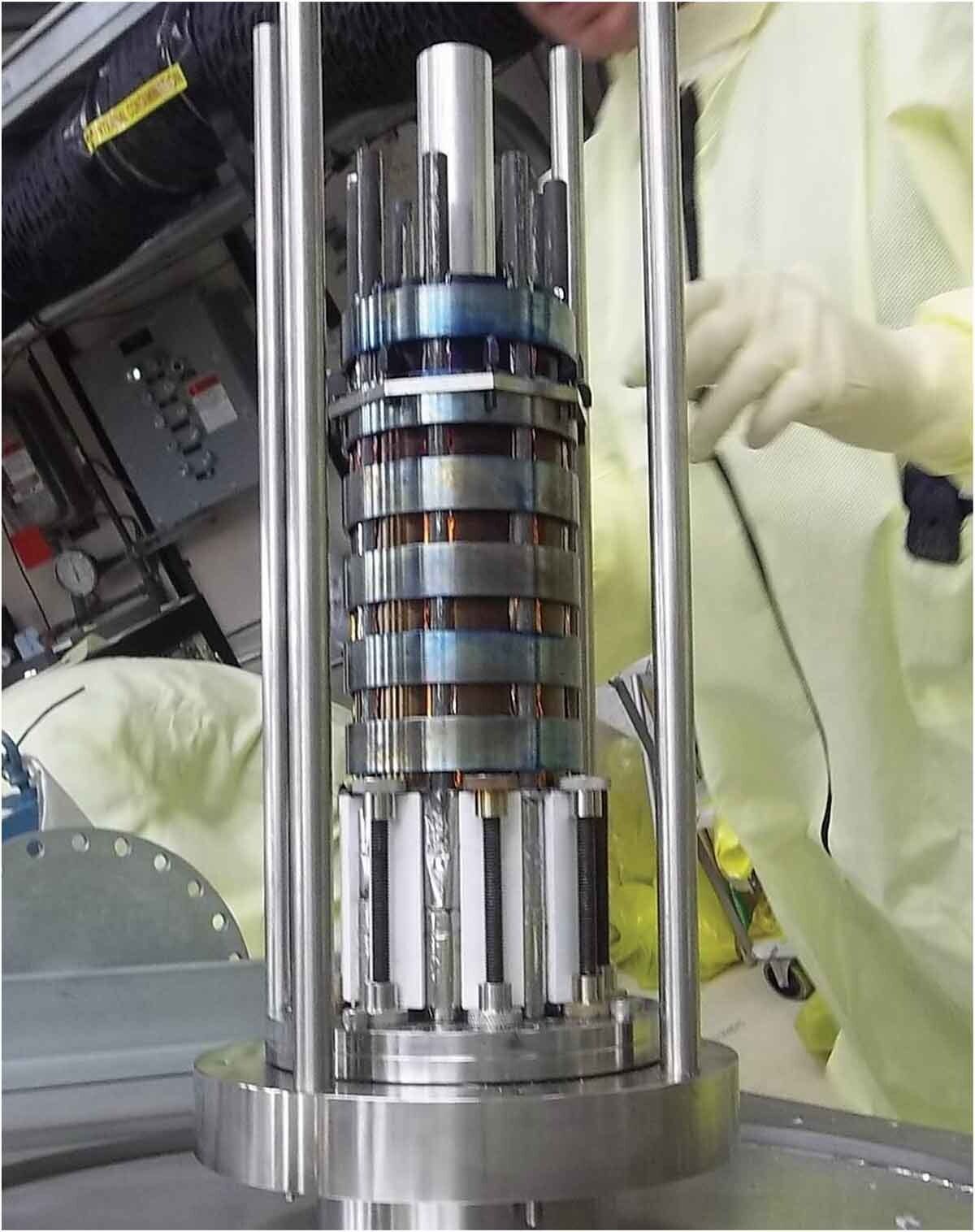
Saying you have a passive, excursion-proof reactor is one thing, but you have to prove it. The KRUSTY project incorporated fully-representative testing of a high power KiloPower reactor configuration and its cooling, heat management, electricity generation and structural systems. How did this work, where previous reactors fell flat?
The daily mantra of the KRUSTY team was something that sounds very simple, but is surprisingly hard for engineers to grasp, and it is: “The best is the enemy of good enough”. The reactor had to be simple, hands-off and do what it needed to do, no more. Far too often the instinct for perfectionism grips the engineer’s soul, and before you know it simplicity has been usurped by the kind of complex, twisted design that gives non-engineers palpitations and engineers the horn: Pipes and ducts like a glassblower’s nightmare, active control systems moving effortlessly from one ideal state to another via valves, motors, sensors, smart control. Thermal and fatigue limits cut to the bone for light weight and efficiency, running a knife-edge of engineered perfectionism.
How exhausting.
Do Not Enhance Performance At The Expense Of Project Success! It should be written in gold letters three feet high.
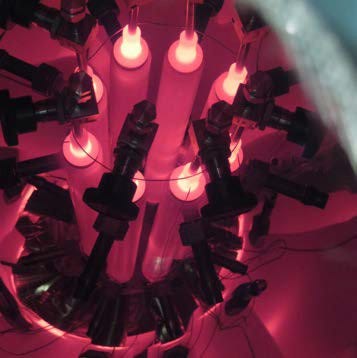
And one of the benefits of keeping it simple was that the KRUSTY test regime was simple, too. A fully system-representative test rig was created with correct materials at every stage (though with non-fissile “fuel”) so the system could be run up to full thermal power via electrical heating and control excursions simulated on a real system. Neutron absorption could be tested, the damping effect of heating on the neutron reflector assessed, the failure of one or more of the Stirling engines simulated and a loss of coolant scenario run. Because of the simplicity of the design it wasn’t even necessary to run reactivity assessments with control rod actuation, since the tiny, beautiful reactor is entirely passively controlled and only needs the control rod moved to start it.
None of this would have been possible without the guiding principle of design simplicity, and there’s a lesson in this for all of us.
Sometimes the hardest thing to do is take something away.
The core design philosophy of Colin Chapman, founder of the legendary sportscar maker Lotus, was “simplify, and add lightness”. Now anyone who has climbed in or out of a Lotus Elise would probably agree that maybe he could have added a bit more space as well, especially if you’re six foot, but the principle stands. Kilopower could have added more control systems, it could have added a robotic refuelling cycle, remote process monitors, active dousing systems, all kinds of things. It chose not to because, hiding in this empty room was a spirit of pure invention. Invention and a realization: That if you make something pure of form, it doesn’t need to be complicated to work.
And so, for the first time in four decades an advanced reactor was tested in the United States! May it be the first of many.
And may its children take us to the stars.
 | A guest post by
|