

Mass Value Report for November 2025
A new contender enters the ring

The big news this month is the first successful recovery of Blue Origin’s New Glenn booster. After a decade, there is at last a propulsively landed orbital class first stage that is not made by SpaceX. Launch competition has been hyped for a long time - New Glenn itself was first announced to the public way back in 2016 - and an understandable cynicism has developed in some quarters. Can anybody even compete with the new titan of the space industry? Is there an effective monopoly?
For the moment, there is a near monopoly, but there is limited first mover advantage (perhaps getting access to more of the radio spectrum for Starlink is the most notable part) and there are plenty of new contenders. Rocket Lab and Stoke for instance are ones to watch. If anything, there is a second mover advantage as SpaceX did the hard yards of showing reuse was possible and practical.
SpaceX is of course not resting on their laurels; the Starship program is preparing for its next iteration to fly in the new year, and Falcon 9 continues to set the pace in terms of cadence and number of reuses.
Falcon Flights
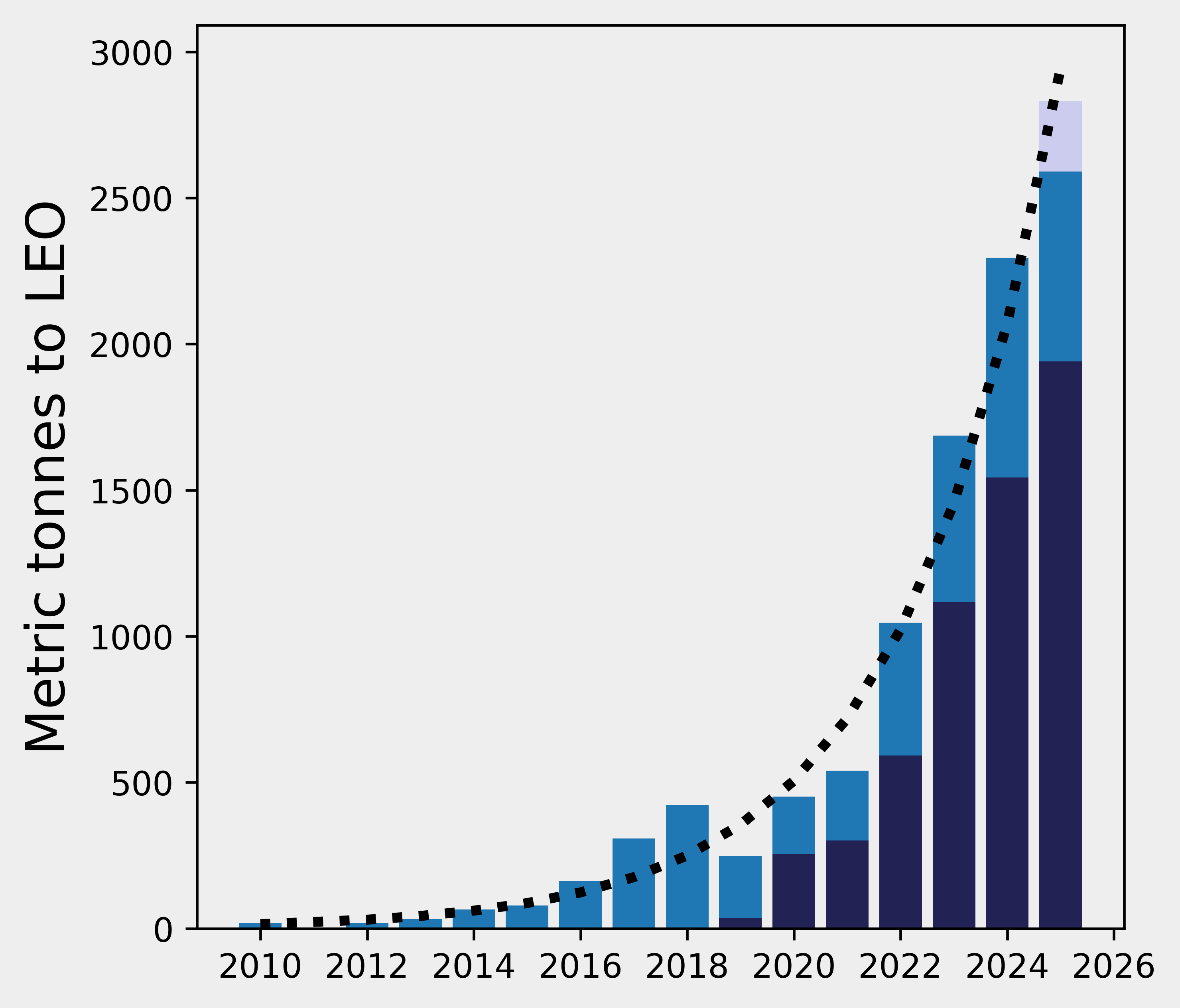
There have been 13 flights this month, down from 15 last month, but SpaceX have still launched 152 successful rockets this year. As a reminder, the Space Shuttle managed 135 flights in its entire thirty year career.
Is this a fair comparison? The payload capacity of the Shuttle’s cargo bay is closer to a Falcon Heavy than a Falcon 9, and it also carries 7 astronauts to space. Can we establish some kind of reasonable exchange rate to compare them?
To start with, lets look at mass to orbit.
Keep reading with a 7-day free trial
Subscribe to Planetocracy to keep reading this post and get 7 days of free access to the full post archives.